
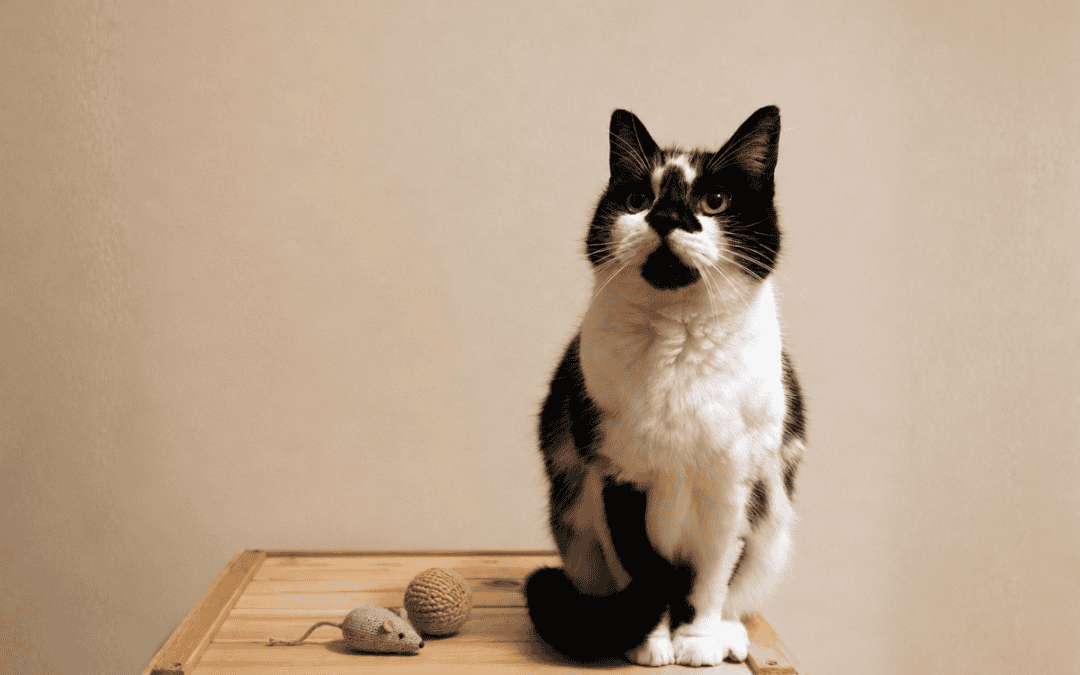
Your Cat Isn’t Broken. They’re Just a 7pm Cat.
If you’ve ever spent the day trying to tempt your cat into playing, only for them to ignore you completely, then suddenly turn into a furry lunatic the moment you sit down to relax, you’re not alone.
One minute they’re asleep on the sofa.
The next they’re racing up the stairs, skidding around corners, ambushing ankles, and looking as though they’ve had three espressos.
Many cat owners eventually find themselves asking the same question:
Why do cats play at night?
The answer has very little to do with your cat being naughty, stubborn, or deliberately choosing the most inconvenient time.
Most of the time, they’re simply being a cat.
When Are Cats Most Active?
Cats are usually most active at two times of day: early morning and early evening, around dusk.
You may have heard people describe cats as nocturnal. That’s not quite right. Cats are actually crepuscular, which is a fancy way of saying they’re wired for sunrise and sunset. Those are the hours when their prey would have been moving. When the light was low, the shadows were long, and the hunt was on.
Our cats now live in warm homes with full food bowls and comfortable beds. But those instincts are still in there, ticking away quietly, waiting for the right moment.
If you want to understand more about how this shapes your cat’s whole day, I’ve written a full guide to play time with cats that’s worth a read.
The 7pm Cat
For most of the afternoon, Lilly is fairly predictable.
She’ll move between favourite sleeping spots, supervise whatever I’m doing from a safe distance, and occasionally reposition herself for maximum comfort.
Then somewhere around early evening, everything changes.
She starts appearing more often.
If I walk into another room, she follows.
If there’s a toy on the floor, it suddenly becomes interesting again.
Sometimes she charges up the stairs at full speed, skids slightly on the rug, then looks surprised by her own enthusiasm.
That’s usually my cue.
Not because I’ve found the perfect toy.
Not because she’s suddenly become a different cat.
But because I’ve caught her at the right time.
Why Do Cats Play at Night?
When people search “why do cats play at night”, they’re often talking about this exact behaviour.
The cat who has spent most of the day asleep suddenly wants to chase, climb, pounce, inspect cupboards, investigate shopping bags, and become involved in absolutely everything.
Play and hunting are closely linked. When your cat becomes more active in the evening, their interest in movement often increases too.
That is why a toy that gets completely ignored at 2pm can suddenly become fascinating a few hours later.
The toy hasn’t changed.
The timing has.
Understanding Cat Dawn and Dusk Behaviour
Once you start noticing cat dawn and dusk behaviour, it becomes easier to understand.
You might see your cat:
- Following you around the house
- Watching movement more closely
- Bringing toys into the room
- Becoming more vocal
- Running from room to room for no obvious reason
- Suddenly wanting to play
Lilly has her own way of making her feelings known. She’ll sit next to her toy box and meow loudly until I get the message.
Subtlety is not her strong point.
Your cat may have their own version. They might chirp. They might sit near a toy. They might suddenly launch themselves at the rug as though it has personally offended them.
The details differ, but the message is often the same.
They’re ready to do cat things.
The Mistake I Made With Play
When Lilly first came to live with me, I assumed play was simple.
You pick up a toy.
You wave it around.
The cat plays.
That wasn’t how it worked.
I’d sit there moving a teaser toy and Lilly would look at me as though I’d interrupted something important.
I remember thinking she just wasn’t interested in playing.
Then one evening, a toy slipped under the edge of the sofa.
Lilly froze.
Her eyes locked onto it.
She crouched, wiggled slightly, and launched herself at it.
That tiny moment changed how I thought about play.
The difference wasn’t the toy. It was the timing. I’d accidentally caught her at exactly the right moment, that early evening window when her inner hunter was already switched on.
From then on, I stopped trying to create enthusiasm from scratch. I started looking for the moments when it was already there.
Why Routine Makes Such a Difference
One thing that surprised me was how quickly Lilly learned when play happened.
I never taught her.
I didn’t set an alarm.
I simply started playing with her at roughly the same times each day.
Usually while the kettle was boiling in the morning.
Then again after work.
And once more after dinner.
Now if I’m late, she notices.
Sometimes she’ll sit near where her teaser toy is kept.
Sometimes she’ll follow me into the room where we usually play.
It’s as though she’s checking whether I’ve forgotten my role as unpaid entertainment.
Regular play becomes part of the rhythm of their day. Once they know when it usually happens, many cats begin to anticipate it. And that makes play feel less like persuading them, and more like meeting them where they already are.
Can You Change Your Cat’s Schedule?
You can shape it a little, especially with regular feeding times and predictable play sessions.
But in most homes, it’s easier to work with your cat’s natural active times than to fight against them.
If your cat naturally perks up in the early morning or evening, those are often the best times to offer play.
You’re not trying to convince them from scratch.
You’re joining in when they’re already halfway there.
Final Thoughts
So if your cat suddenly decides that 7pm is the perfect moment to sprint through the house, ambush your ankles, and drag a battered toy mouse into the kitchen, there’s a good chance they’re not being strange at all.
They’re simply doing what cats have always done.
The only difference is that instead of hunting through long grass at dusk, they’re doing it on your hallway rug.
Tonight, try watching for the moment your cat naturally perks up. Not the moment you think play should happen. The moment they start following you, watching movement, carrying toys around, or looking at you like you’ve forgotten your job.
Then try five minutes of play. Keep it short. Move the toy like something worth chasing.
If you want less guessing and more of those moments where your cat actually engages, take a look at what’s inside a Cativity Box. Everything is chosen to work with your cat’s natural instincts, so you can stop wondering what might work and start seeing what does.
Because play isn’t just about tiring your cat out. It’s one of the ways you learn each other.
Angela is the founder of Cativity Box, a UK small business dedicated to cat enrichment. She lives with her cat Lilly, who has strong opinions about play time and even stronger opinions about when it should happen.